← Back to Blog

The “Early Whale” Phenomenon in San Francisco Bay: Why Whales Are Showing Up Sooner, And How We Safely Share the Water

February 23, 2026
The “Early Whale” Phenomenon in San Francisco Bay: Why Whales Are Showing Up Sooner, And How We Safely Share the Water

The first gray whale of 2026 was spotted unseasonably early inside San Francisco Bay on January 21, 2026, and that single sighting captured exactly what we mean when we talk about the “Early Whale” phenomenon on the Bay.

Key Takeaways

Question Short Answer
What is the “Early Whale” phenomenon in 2026? It is the growing trend of gray and other whales appearing earlier in the season inside San Francisco Bay, with confirmed early sightings in 2026 that local captains are watching closely.
Why does it matter for San Francisco Bay boat charters? Earlier whales mean more chances to see wildlife during private charters and custom trips, but they also raise safety and navigation stakes for every boat on the Bay.
Can I safely watch early whales on a fishing charter? Yes, as long as your SF fishing charter is operated by a whale‑aware, USCG licensed captain who knows how to slow, steer clear, and give whales space.
Are open‑water swimmers affected by early whale activity? Indirectly. More whales and changing feeding patterns mean support crews on marathon swim training support boats need to scan more carefully and adjust routes when needed.
Where are early whales most often seen near SF? Around the Golden Gate approach, shipping lanes, and offshore toward the Farallon Islands, where curated wildlife boat tours from San Francisco often travel.
How do small charters help protect whales? Intimate groups and purpose‑driven eco‑missions with local captains can slow down, give extra distance, and follow Whale Smart guidance much more easily than large, fixed‑route vessels.

Understanding the “Early Whale” Phenomenon in San Francisco Bay

When we talk about the “Early Whale” phenomenon in 2026, we mean whales arriving inside or near San Francisco Bay weeks earlier than many local mariners once expected.

For a working charter boat like ours, that shifts the calendar for when we start scanning for blows, flukes, and feeding behavior during regular trips, not just dedicated wildlife outings.

Why Earlier Sightings Matter For Everyday Bay Trips

Earlier gray whales in the Bay turn a simple lighthouse run or SF fishing charter into a possible whale‑watch moment, even before the “classic” season kicks in.

That sounds magical, but it also means that from the helm we treat almost every winter and spring outing in 2026 as potential shared whale habitat, not just offshore passages.

The Local Context: Bay As A Feeding Stop, Not Just A Highway

San Francisco Bay is not just a migration corridor, it can be a feeding stop and rest area, especially for gray whales that come in close to shore and shallow mudflats.

Earlier arrivals hint that whales might be adjusting to shifting ocean conditions, prey patterns, or simply finding the Bay a useful pit stop for a longer window in 2026.

BAY EXPLORATION TOUR
LIGHTHOUSE TOUR

Gray Whales, Humpbacks, And Changing Migration Patterns In 2026

Right now in 2026, gray whales are the headline for early arrivals inside San Francisco Bay, but humpbacks and other species shape the wider pattern offshore and near the Golden Gate.

We pay attention to all of them, because a captain who only scans for one species in one month is going to miss what the water is really telling us.

Gray Whales As Early Season Regulars

Gray whales are coastal by nature, which is why they slip past the headlands and into the Bay where local boaters and even shore‑based watchers sometimes see them feeding in shallow water.

In 2026, that behavior starting earlier in the year means our winter and early‑spring trip briefings include gray whale awareness right alongside tide talk and wind forecasts.

Humpbacks At The Farallones And Offshore

Out toward the Farallon Islands, humpbacks are the whales many guests imagine when they picture towering flukes and feeding frenzies around bait balls.

Reports from 2025 tallied over 1,200 humpback whales observed across about 50 Farallon expeditions, which lines up with what we expect again in 2026 for offshore wildlife activity.

Farallon Islands tour
Lighthouse Tour

Safety First: How Early Whales Change The Way We Operate On The Bay

As early whales become part of the normal rhythm of 2026, safety is not a line item for us, it is the core of how we run Molly’s boats on every trip.

When we bring families, scientists, or swimmers into San Francisco Bay, we carry the responsibility to keep both people and whales safe in some of the busiest waters on the West Coast.

Vessel Strikes, Busy Lanes, And Why Small Boats Matter

In recent years, multiple whale deaths in the wider Bay Area have been tied to suspected or probable vessel strikes, a reality that all captains on the Bay are reckoning with in 2026.

Our advantage on Miss Molly is that a small charter boat with a USCG licensed captain can slow, steer early, and re‑route more easily than large commercial traffic when a whale appears ahead.

How We Brief Guests During “Early Whale” Season

On the dock, we keep it simple: if you see a blow, fluke, or unusual disturbance ahead, point and tell the captain immediately so we can adjust speed and course long before we get close.

We also remind everyone that the best wildlife encounters in 2026 are quiet, unhurried, and at a respectful distance that lets whales decide how much they want to show us.

FARALLON LINGCOD & ROCKFISH
FULL DAY ECO-MISSION


Infographic illustrating 3 key aspects of The 'Early Whale' Phenomenon with trends and timelines.

An at-a-glance visual guide to three core aspects of the Early Whale Phenomenon. The infographic distills trends and timelines for quick understanding.

Early Whales And SF Fishing Charters: Sharing The Water With Giants

Many guests first meet the “Early Whale” phenomenon while they are out for halibut, rockfish, or shark on a San Francisco Bay fishing charter, not on a dedicated whale tour.

We design our fishing days around tide, currents, and structure, but in 2026 our planning also includes the latest reports on where whales have been surfacing along the route.

How We Adjust Fishing Plans When Whales Are Around

If whales are feeding in an area we meant to troll, we have options, we can slide to different structure, fish another tide window, or pause lines until we have a safe buffer again.

Our trips like the 5 Hour Fishing or 7 Hour Fishing charters, which typically range from about $1,400 to $1,700, stay flexible so the day is good fishing and good whale etiquette at the same time.

What Guests Can Expect To See In Early Season 2026

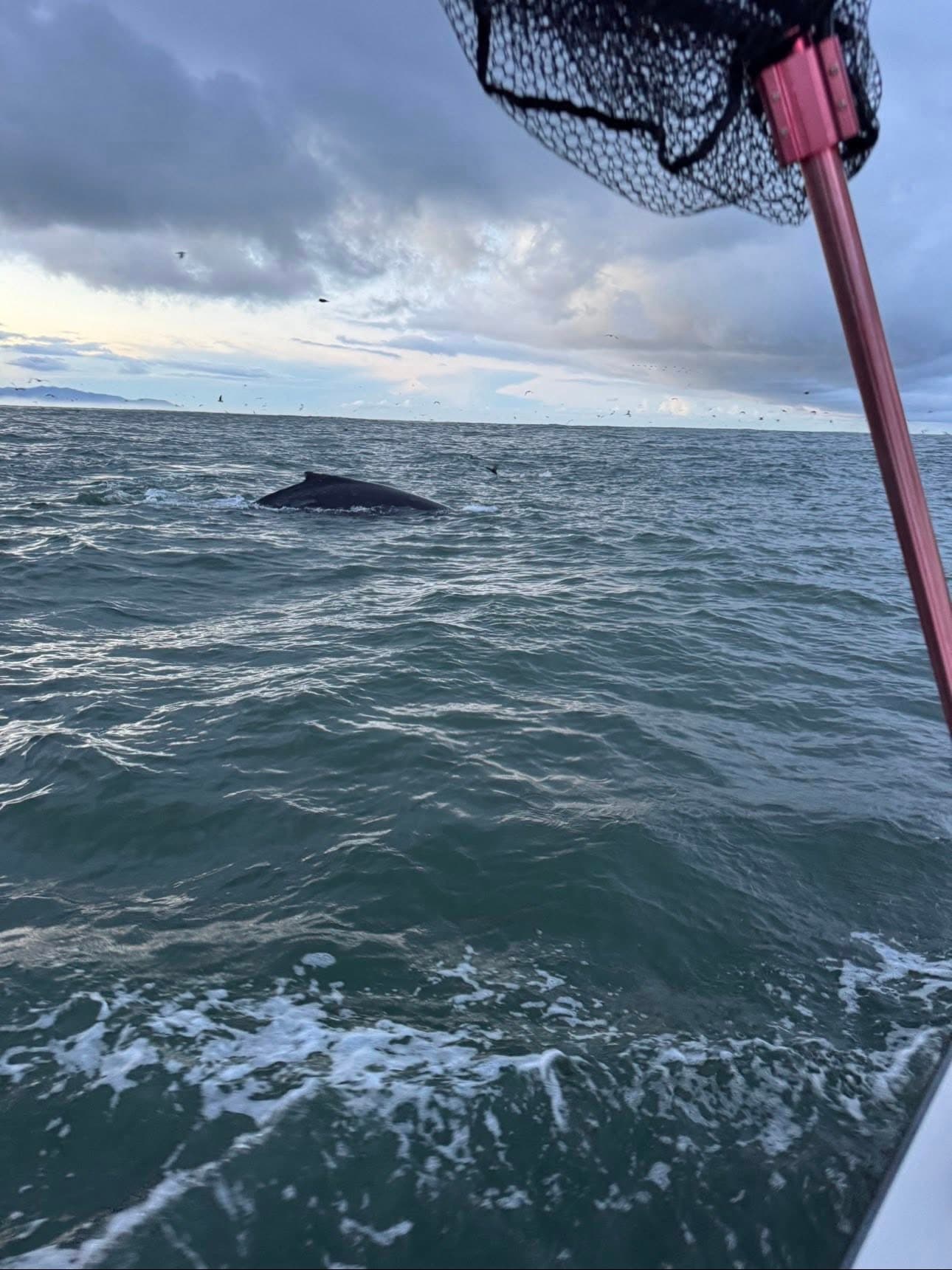
On early season SF fishing charters in 2026, you might be watching a rod tip bounce for halibut when a gray whale surfaces 200 yards away, exhaling in the cold air.

When that happens, we slow down the pace, soak in the moment, and then get back to the mission of the day once the whales have moved off safely.

7 HOUR FISHING
5 HOUR FISHING

Did You Know?
In 2025, 33 gray whales were sighted in San Francisco Bay via photo identification, up from just six sightings the year before, a surge that helps explain why early season 2026 feels so whale-active to local captains.

Swim Support And Early Whales: Open Water Training With Extra Awareness

San Francisco Bay is a training ground for marathon swimmers in 2026, and our swim support work means we are often closest to the water when early whales cruise through.

On a 4, 6, or 8 hour Marathon Swim Training session, the swimmer’s mission comes first, but we never forget that they are sharing that water with large, wild animals.

How Early Whales Change Swim Planning

When we plan a long swim, we already account for tides, water temps, and wind, and during early whale season in 2026 we also check fresh sighting reports before we pick a line.

If the main route has recent whale activity, we can shift to a slightly different track so the swimmer and the whales both get space to do what they are there to do.

Support Boat Role: Eyes, Ears, And Guardian

The swimmer is focused on their stroke, so on Miss Molly we act as eyes and ears for everything else, including any unexpected wildlife that surfaces near the course.

Our job is to keep the swimmer safe, calm, and informed, which is why we talk through what to expect if we see a whale during the briefing long before anyone jumps in.

MARATHON SWIM TRAINING (8 hours)
MARATHON SWIM TRAINING (6 hours)

Eco‑Missions, Research, And Whale‑Smart Navigation

Our eco‑missions on the San Francisco Bay and out toward the Farallones are purpose‑driven trips, which makes them a natural fit for people curious about the Early Whale phenomenon in 2026.

When scientists or small research teams charter our boat, we can focus the entire itinerary on whale‑smart routing, data gathering, and quiet observation in key habitats.

What An Eco‑Mission Day Looks Like

A Full Day Eco‑Mission, priced around $2,912 for up to six people, gives plenty of time to work tidal cycles, weather windows, and whale sighting patterns into the plan.

Shorter 4 or 6 hour options are available too, and all of them prioritize safety, local knowledge, and the goals of the group, whether that is photo ID, acoustic monitoring, or simple observation.

Smaller Groups, Bigger Responsibility

With only up to six people on board, everyone has a role, from helping spot blows to logging GPS locations when whales surface at a safe distance.

That intimacy is what allows us to blend adventure with real stewardship so that early whales in 2026 are a shared responsibility, not just a spectacle.

Farallon Islands
HALF DAY ECO-MISSION

Captain Molly, Local Expertise, And Whale‑Aware Training In 2026

As a San Francisco native and USCG licensed captain, Molly brings decades of local Bay experience to the wheelhouse, and in 2026 that includes formal whale‑aware training.

We see the Early Whale phenomenon as one more reason to blend maritime authority with hospitality, so guests feel the trip is friendly on deck and disciplined at the helm.

Training And The New Whale Smart Emphasis

In 2026, local partners have leaned into Whale Smart training to reduce close calls and vessel strikes, and we keep up with this guidance and fold it into our standard operating habits.

That means extra distance, slower speeds in known whale areas, and clear communication with everyone aboard when whales are nearby.

Personalized Service On A Working Boat

We keep Miss Molly set up for practical comfort, with gear stowed where it should be and safety equipment ready so we can focus our energy on the people and the water around us.

Whether guests are a family on their first SF boat tour or a research team checking hydrophones, they hear the same calm, direct safety briefing before lines are cast off.

Molly's Boats Story
Guide to Farallon Islands Birdwatching & Wildlife Excursions

Did You Know?
In 2025, 24 whales died in the wider San Francisco Bay Area, including 21 gray whales, and eight of those gray whale deaths were suspected or probable vessel strikes, which is why 2026 puts such a strong focus on whale-smart boating.

Planning Your Early‑Season SF Bay Boat Charter With Whales In Mind

When guests reach out to us in 2026 about San Francisco Bay boat tours, they often ask two questions right away: will it be safe, and will we see whales.

The first answer is always that safety comes before scenery, and the second is that early whales are less predictable than a tide chart, but we are on the water often enough to give honest expectations.

Best Trip Types For Early Whale Encounters

If your goal is to improve your odds of seeing early whales, longer itineraries help, like Full Day Eco‑Missions, Farallon Islands tours, or 7 and 8 hour fishing charters.

Those trips give us time to work around weather and traffic, and to spend longer in the open water corridors where whales are more likely to cruise.

What To Bring For A Comfortable, Whale‑Smart Day

We ask you to show up with shoes that stay on, layers for Bay wind, and a respectful mindset for shared wildlife space, and we take care of the rest on the boat.

If children are coming, or if anyone is new to boats, let us know so we can be prepared with extra reassurance, motion sickness tips, and kid‑friendly explanations of what they might see.

FULL DAY FISHING
3/4 DAY FISHING

Families, Kids, And The Wonder Of Seeing Early Whales Up Close (But Not Too Close)

We love having families and kids aboard, and in 2026 that often means being there for a child’s very first whale sighting on the San Francisco Bay.

The Early Whale phenomenon simply widens the window for these moments, giving winter and spring trips the same quiet magic families used to expect mostly in summer.

How We Talk To Kids About Whales And Safety

We keep the language simple, we tell kids that whales are big neighbors who use the Bay too, and our job is to be polite and give them room.

We show them how to point out a blow, how to stay seated when the boat slows, and why we never chase wildlife even if we are excited.

Making The Most Of A Shorter Family Charter

On half‑day SF Bay boat tours with younger children, we balance time between landmarks, wildlife watching, and safe, sheltered water where everyone can relax.

If we are lucky enough to see an early whale, we pause and let the moment soak in, and if we are not, we still give kids a full Bay experience of bridges, birds, and working ships.

ADVANCED SWIM
BAY EXPLORATION TOUR

Conclusion

In 2026, the “Early Whale” phenomenon has become part of daily life on the San Francisco Bay, from quiet weekday fishing charters to full‑day eco‑missions and marathon swim support.

For us on Miss Molly, it is a reminder that every trip is a shared mission with the Bay itself, and that the safest, most rewarding adventures happen when local expertise, whale‑smart habits, and genuine hospitality all ride on the same boat.